Fear of Speaking Is a Social Inequality
In India, inequality does not always look like poverty.
Sometimes it looks like silence.
Not the silence of peace.
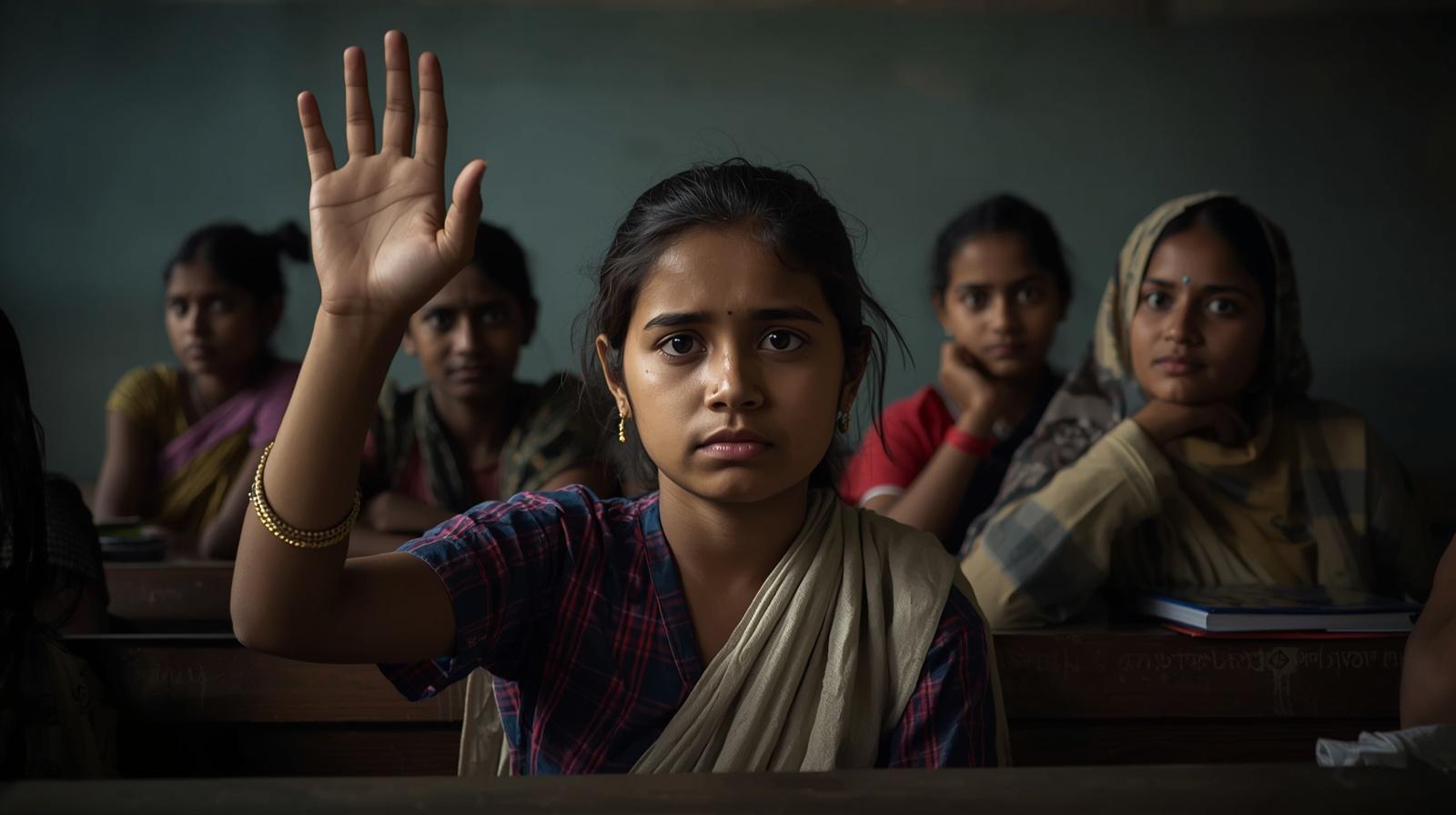
The silence of a student who knows the answer but does not raise her hand.
The silence of a graduate who clears written exams but fails interviews.
The silence of a brilliant engineer in a meeting where ideas are flowing in English and confidence.
We talk about inequality as income gaps, private schools versus government schools, urban versus rural. Those are real. But there is another inequality that rarely makes headlines:
The inequality of voice.
The Hidden Divide: Who Gets to Speak?
In many Tier 2 and Tier 3 cities, a student may understand English grammar, may have scored 85 in board exams, may even write decent answers. But when asked to speak in front of five people, the throat tightens. Words scatter. The brain goes blank.
Now compare that with a student from an English-medium background who has been speaking since childhood — debating, presenting, arguing, improvising.
Both may have similar intelligence.
But one has rehearsal.
The other has hesitation.
That difference is not just confidence. It is opportunity.
When you cannot speak comfortably in the dominant language of higher education and corporate India, you do not just lose fluency. You lose visibility.
And in modern India, visibility is currency.
Social Inequality, Without Big Words
Let me explain social inequality in a simple way.
Imagine two people standing outside a building called “Opportunity.”
Both are talented.
Both have degrees.
Both are hardworking.
But one has the key called fluency.
The other keeps knocking.
The guard at the door does not say, “You are not intelligent.”
He says, “Can you explain your idea clearly?”
The door does not close because of caste, religion, or marks that day. It closes because of expression.
That is how fear of speaking quietly becomes a social divider.
It does not shout discrimination.
It whispers limitation.
The Classroom That Built the Fear
We built a system obsessed with finishing the syllabus, not building the speaker.
Students write essays.
They underline grammar rules.
They memorise formats.
But they rarely practise thinking aloud.
They are corrected for mistakes, not trained for expression.
They are evaluated on silence, not participation.
Over time, the classroom teaches a subtle lesson:
“Better to be quiet than to be wrong.”
That lesson follows them into college.
Then into interviews.
Then into boardrooms.
And eventually, into self-doubt.
The Economic Cost of Silence
When a young graduate cannot articulate ideas, the cost is not just personal embarrassment.
It affects employability.
India is building startups, AI products, global service companies. We are exporting software, consulting, design, research. But the global workforce demands more than technical knowledge. It demands articulation, negotiation, storytelling, collaboration.
If millions of capable youth remain silent because they never practised speaking, we are not just facing a personal confidence issue.
We are leaking national potential.
For a country that speaks about demographic dividend, this is serious. A demographic dividend without communicative power becomes demographic pressure.
Fear Is Not Personality. It Is Practice Deficit.
Many students tell me, “Sir, I am an introvert.”
But I have seen the same “introvert” speak for 40 minutes about cricket in Hindi without fear.
So the issue is not introversion.
It is unfamiliarity.
Fear of speaking in English is rarely about intelligence. It is about lack of safe, repeated rehearsal.
You cannot expect fluency from exposure alone. You need cycles of attempt, feedback, correction, and retry.
In music, we call it riyaaz.
In sports, we call it drills.
In language, we strangely call it “confidence” — as if it is a personality trait.
It is not.
It is muscle memory built in public.
Why This Is an India-Future Issue
India’s next growth wave is not only about coding and AI development. It is about human-AI collaboration, client communication, cross-border conversations, digital influence.
The future workforce must be able to:
- Present ideas clearly.
- Ask intelligent questions.
- Defend viewpoints respectfully.
- Speak to machines and humans with clarity.
If communication remains limited to elite schools and urban pockets, inequality widens in a new form.
We will have digital access without expressive power.
Connectivity without confidence.
That is a dangerous gap.
The Reform We Actually Need
We do not need more grammar lectures.
We need structured speaking labs.
Spaces — physical or digital — where students speak daily.
Where mistakes are expected.
Where feedback is instant.
Where repetition is normalised.
AI-enabled speaking practice systems can play a historic role here. Not as teachers replacing humans, but as practice partners that never get tired, never judge, and are always available.
Imagine colleges in semi-urban India with AI practice labs where students speak for ten minutes daily, receive structured feedback, and track improvement.
Imagine NGOs running communication labs powered by affordable AI tools.
Imagine institutions shifting from “finish the syllabus” to “finish 500 minutes of speaking practice.”
That is systemic change.
That is scalable reform.
Voice as Equaliser
When a young person realises, “I can speak. I can express. I can explain my idea,” something shifts internally.
They apply for internships they previously avoided.
They participate in discussions.
They pitch ideas.
They negotiate salaries.
Voice changes posture.
Posture changes opportunities.
Opportunity changes income.
And income changes family trajectories.
That is how something as simple as speaking practice becomes a lever of social mobility.
The Real Question
The fear of speaking is not a small personal flaw.
It is a structural gap.
If we are serious about equality in modern India, we must treat communication practice as infrastructure — as important as internet connectivity and digital literacy.
Because in a world driven by ideas, the one who cannot speak them remains invisible.
And invisibility is the quietest form of inequality.
The question is not whether our students know English.
The question is whether they have been trained to use their voice.
And until that changes, silence will continue to separate potential from power.